Picture this: you leave downtown Seattle on a Friday, step onto a ferry, and 35 minutes later you are pouring a glass of wine on your deck with a water view. If you are weighing a second home for weekend escapes or partial retirement, Bainbridge Island gives you rare access and a true island feel. Still, buying a second home here has a few island-specific rules, costs, and timing details you will want to nail down early. In this guide, you will learn how to set your plan, what to budget, which permits and checks matter, and how to avoid common mistakes. Let’s dive in.
Why Bainbridge for a second home
You get quick access without a long drive. The Seattle–Bainbridge ferry crossing is typically about 35 minutes, and it is one of the busiest runs in the system, so plan peak travel times with care. You can review route context and timing on the State Route 305 page on Wikipedia for a high-level overview of the corridor and terminal access points (learn more about SR 305). Washington State DOT continues to adjust sailing schedules to improve reliability on busy routes, which is helpful if you expect regular weekday trips (see WSDOT schedule updates).
On pricing, Bainbridge sits near the top of regional medians. Recent Northwest MLS reporting placed the island among the highest-median markets in the area, with a median in the low-to-mid seven figures for recent closed sales (view NWMLS reporting). Portals publish different snapshots and methods. For offer strategy, rely on local MLS comps and your agent’s micro-market read.
Set your second-home plan
Financing depends on how you will use the home. Lenders classify a true second home as a place you occupy part of the year that is suitable for year-round living and not controlled by a rental pool or management agreement. Most lenders expect roughly 10 to 20 percent down, strong credit, and extra cash reserves. Net rental income from a second home is generally not counted to qualify, so speak with a lender early to confirm how your file will be underwritten (Fannie Mae guidance).
If you plan to rent often or primarily, the lender may treat the property as an investment. That can mean higher down payment, different reserve rules, and rate changes. Be clear about your intended use at the start so you receive the right preapproval and pricing.
Know the STR rules
If you want vacation-rental income, Bainbridge has clear short-term rental requirements. The City requires a Short-Term Rental Certificate for any rental of fewer than 30 consecutive days, plus annual renewal. Operators must also hold state and city business licenses and collect lodging taxes, with the city site citing a 4 percent lodging excise tax (City STR guidance).
The municipal code outlines the operational details you must follow. Highlights include displaying your certificate number in ads, occupancy and parking rules, 24/7 local contact, required emergency information, neighbor notices for many non-owner-occupied setups, and penalties for violations (read BIMC 5.38). Many HOAs and condo associations limit or prohibit STRs, and the city may require written HOA consent for some applications. Confirm HOA rules and meeting minutes before you assume rental income.
Waterfront and shoreline checks
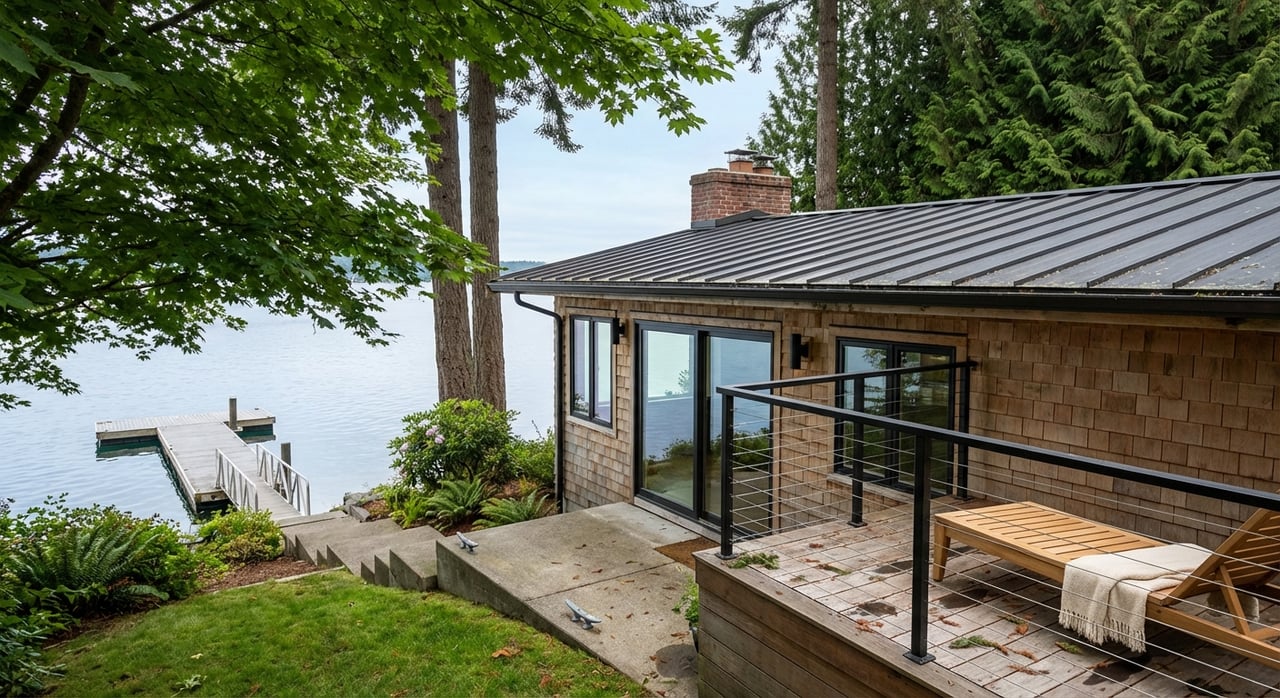
Waterfront living is a major draw, but shoreline work is tightly regulated under the City’s Shoreline Master Program with a “no net loss” ecological goal. New or expanded shoreline armoring, over-water structures, and docks often require permits, environmental review, and geotechnical justification. If you are considering a bluff property, plan for a coastal assessment and a conversation with City planning staff before you count on adding a dock or new bulkhead (City Shoreline Master Program).
Practical tip: ask for past shoreline permits and any enforcement history as part of due diligence. The answers will influence both your project scope and insurance costs.
Utilities, septic and rates
City water and sewer do not cover the entire island. Many homes, especially rural and some waterfront parcels, rely on wells and onsite septic systems. For septic, Kitsap Public Health handles permits, records, and required inspections. Request the as-built design, pump-out history, and the latest inspection report, and budget for maintenance or upgrades if the system is older (Kitsap Public Health septic info).
If you plan to connect to city utilities in the future, ask about service area and costs early. Also account for potential utility rate increases the City has discussed to fund system upgrades, which can impact your long-term carrying costs (local rate context).
Commute reality check
The vessel time is only part of your door-to-door day. Add time for getting to the terminal, parking or loading, and the last mile on the Seattle side. Walk-on access from Winslow-area homes usually shortens the commute. Test weekday trips in both directions at your typical hours so your expectations match real travel times (route overview).
Costs, taxes and budgeting
Washington charges a Real Estate Excise Tax when property changes hands, using a graduated state schedule plus a local portion. Brackets and rules are updated from time to time, so use the Department of Revenue’s resources or calculator to estimate closing costs for your price band (WA DOR REET). If you operate a short-term rental, plan for city lodging tax collection and business reporting. For ongoing carrying costs, property taxes in absolute dollars tend to be higher on Bainbridge because values are higher, though actual amounts depend on assessed value and levy rates.
On insurance, check flood zones and specialty coverages. If a home is in a FEMA Special Flood Hazard Area and you use a federally backed loan, flood insurance is typically required. Pull a flood map for the exact address and get quotes before you finalize your underwriting and reserves (FEMA/NFIP background).
Your step-by-step due diligence
Use this checklist before you write an offer:
Define use and nights per year. Clarify whether the home is primarily for you or if you expect meaningful rental. Share this with your lender so they classify the loan correctly (Fannie Mae guidance).
Do a commute test. Time home to terminal, boarding, the vessel, and last mile to Seattle on a normal weekday, morning and evening (route overview).
Confirm STR eligibility. Read the City STR guidance and BIMC 5.38, then review HOA CC&Rs and minutes for any stricter rules (City STR guidance, BIMC 5.38).
Verify utilities and onsite systems. Determine if the parcel is on city water or sewer. If on septic or well, pull Kitsap Public Health records and request recent inspections and pump-out receipts (Kitsap Public Health).
Order waterfront due diligence. Ask for past shoreline permits, consult a coastal geotechnical professional, and speak with City planning about feasibility for docks or stabilization (Shoreline Master Program).
Get insurance quotes. Check flood zone status and obtain flood, homeowners, and umbrella quotes that align with any planned STR use (FEMA/NFIP background).
Secure financing preapproval. Confirm second home vs investment classification, down payment, reserves, and treatment of any existing mortgages (Fannie Mae guidance).
Model STR operations. If the seller has rental history, request calendars and gross receipts. If not, commission a local revenue forecast and identify who will manage guest logistics and 24/7 contact (City STR guidance).
Build a carrying cost budget. Include HOA dues, utilities, potential rate increases, insurance, maintenance, and property management if applicable (local rate context).
Run title and permit checks. Ask for a title report, easements, covenants, and any code enforcement. Request shoreline and septic permit records and confirm there are no outstanding issues with the City (Shoreline Master Program).
Work with local expertise
A second home on Bainbridge can be a smooth, rewarding move when you plan around ferry timing, shoreline rules, financing, and operating costs. You do not need to solve that alone. Our team pairs deep island expertise with a concierge buying process, from early due diligence and vendor quotes to negotiation and a clean close. If you are exploring options, request a private, no-pressure plan tailored to how you want to use the home.
Ready to take the next step? Connect with Mark Middleton Real Estate to map your Bainbridge second-home strategy today.
FAQs
Is Bainbridge practical for a Seattle commute from a second home?
- The ferry crossing is about 35 minutes, but door-to-door time varies with terminal access and last-mile travel; test weekday trips at your typical hours for a clear picture.
Can I run a vacation rental at my Bainbridge second home?
- Yes, if you follow city rules, including obtaining a Short-Term Rental Certificate, business licenses, lodging tax collection, and any HOA restrictions outlined in BIMC 5.38.
How much down payment do I need for a Bainbridge second home?
- Many lenders expect roughly 10 to 20 percent down with strong reserves, and net rental income from a second home typically does not count toward qualifying.
What should I check before buying waterfront on Bainbridge?
- Review the City’s Shoreline Master Program, pull past shoreline permits, consult a coastal geotechnical professional, and confirm feasibility with City planning staff.
How do septic systems affect a Bainbridge purchase?
- Many homes are on septic; request as-built designs, inspection and pump-out records, and consult Kitsap Public Health for permits and maintenance expectations.
What closing taxes should I expect in Washington?
- Washington’s Real Estate Excise Tax uses graduated state brackets plus a local portion; use the WA Department of Revenue resources to estimate your total based on price.