Thinking about trading Seattle traffic or Eastside sprawl for a waterfront town with a little more breathing room? Poulsbo can be a compelling move, but it helps to know what daily life really looks like before you commit. If you are considering a relocation, this guide will help you understand Poulsbo’s commute patterns, neighborhood feel, housing mix, and what to test in person before you buy. Let’s dive in.
Why Poulsbo draws relocators
Poulsbo sits on Liberty Bay at the north end of the Kitsap Peninsula, and it offers a lifestyle that feels distinct from larger metro areas. The city describes itself as a Norwegian-themed waterfront community, and it combines a compact downtown with everyday services, parks, trails, marinas, restaurants, and transit access.
For many buyers, the appeal is balance. Poulsbo is big enough to support daily errands and recreation, but small enough to feel manageable. The city has over 13,000 residents, 15 parks totaling 141.67 acres, 5.23 miles of public trails, three marinas, 51 restaurants, 12 art galleries, and 85 bus stops.
That variety matters when you relocate. Your experience in Poulsbo will depend a lot on where you live, because the town includes a walkable historic core, convenience-focused commercial corridors, waterfront edges, and more suburban or rural residential pockets.
Seattle and Eastside commute reality
If you are moving from Seattle or the Eastside, commute planning should be one of your first filters. Poulsbo can work well for some Seattle-bound routines, but Eastside commuting is usually more complicated because there is no direct ferry route from Poulsbo to Bellevue or Redmond.
For Seattle access, many residents connect through Bainbridge Island or Kingston. Washington State Ferries lists the key nearby routes as Seattle/Bainbridge Island, Seattle/Bremerton, and Edmonds/Kingston, and Kitsap Transit Route 390 links Poulsbo park-and-ride locations to the Bainbridge Island Ferry Terminal.
The city notes that the Bainbridge-to-Seattle ferry ride is about 35 minutes, while Kingston-to-Edmonds is about 30 minutes. Kitsap Transit also operates the Kingston Fast Ferry Monday through Saturday, with an approximate 40-minute crossing to downtown Seattle’s Pier 50.
The important part is this: your commute is never just the sailing time. You may need to account for a drive to a park-and-ride, a bus connection, terminal access, ferry loading, and then a final leg once you arrive.
WSDOT also describes SR 305 as a major commuter route in northern Kitsap County, and that matters if you are relying on Bainbridge connections. Ferry access, construction activity, and work zones can all affect timing, so you should budget for variability rather than planning around best-case conditions.
What Eastside buyers should know
For Eastside commuters, the process usually includes a transfer or a longer drive leg. That does not make the move impossible, but it does mean your daily routine may feel less direct than it did when living closer to Bellevue, Redmond, or Kirkland.
If your workweek involves frequent in-person office time, test the full trip more than once. A relocation that looks manageable on paper can feel very different once you factor in school drop-offs, ferry timing, and evening return trips.
Local transit and car-light living
Poulsbo has more transit support than some buyers expect, especially for local errands. Route 344 serves North Viking, Olympic College Poulsbo, Walmart, Town & Country, Safeway, 10th Avenue, the doctors’ clinic and Kaiser medical center, and the library.
The broader North Kitsap network also includes Route 332 and Route 331/390. That can be helpful if you want to reduce how often you drive for basic weekly routines.
Still, transit service is not the same every day of the week. Sunday service is more limited, and on-demand service only covers certain parts of Poulsbo, including downtown, retail areas west of Highway 3 and along Highway 305, and some neighborhoods near Noll Road and Viking Avenue south of Bovela Lane.
If you hope to live with one car or rely heavily on transit, test that lifestyle before you buy. A weekday may feel convenient, while a Sunday errand run may feel much more constrained.
Which parts of Poulsbo feel most walkable?
Historic downtown is Poulsbo’s most walkable area. Front Street, the waterfront park, shops, cafes, galleries, museums, and seasonal events give the core its pedestrian-friendly feel, and city maps for downtown walking and parking reinforce that this is the place where walking is most built into daily life.
If you want to leave the car parked more often, downtown and nearby pockets are worth a close look. This part of town tends to offer the strongest mix of charm, waterfront access, and day-to-day strollability.
That said, downtown can also feel busier during the summer. Tourism is part of the setting, so some buyers love the activity while others prefer a little more distance from the busiest blocks.
The 305 corridor: convenience first
Outside the historic core, the Highway 305 corridor plays a different role. Visit Poulsbo describes “The 305” as a district with many of the town’s restaurants, grocery options, specialty shops, and services.
For buyers, that usually means convenience. If your priority is quick errands, practical access, and easier highway connections, this area may fit better than the most character-filled downtown streets.
Where Poulsbo feels suburban, wooded, or rural
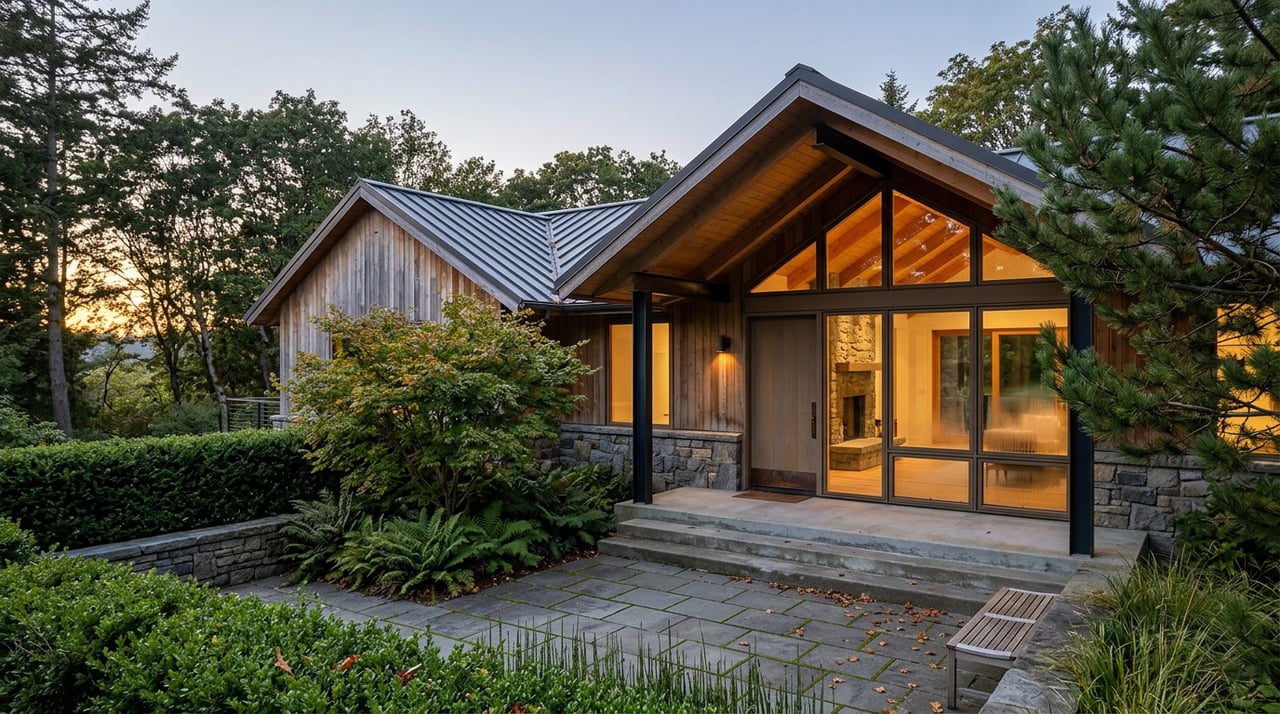
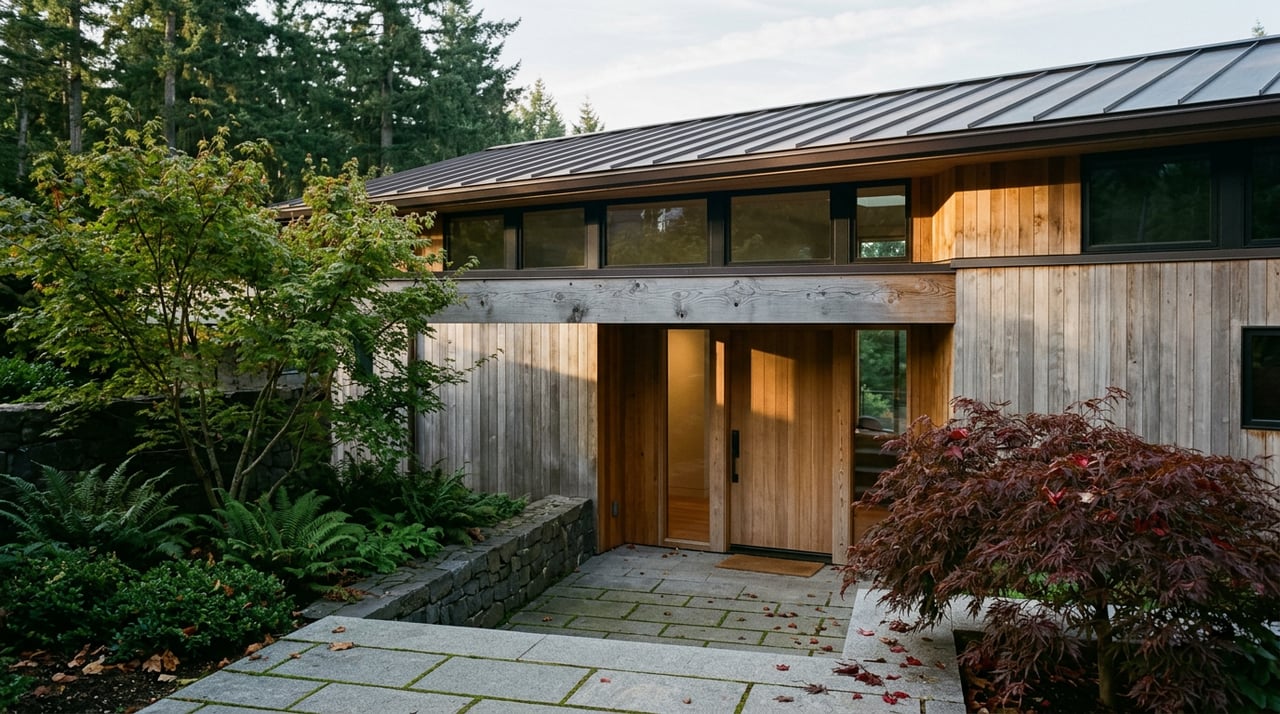
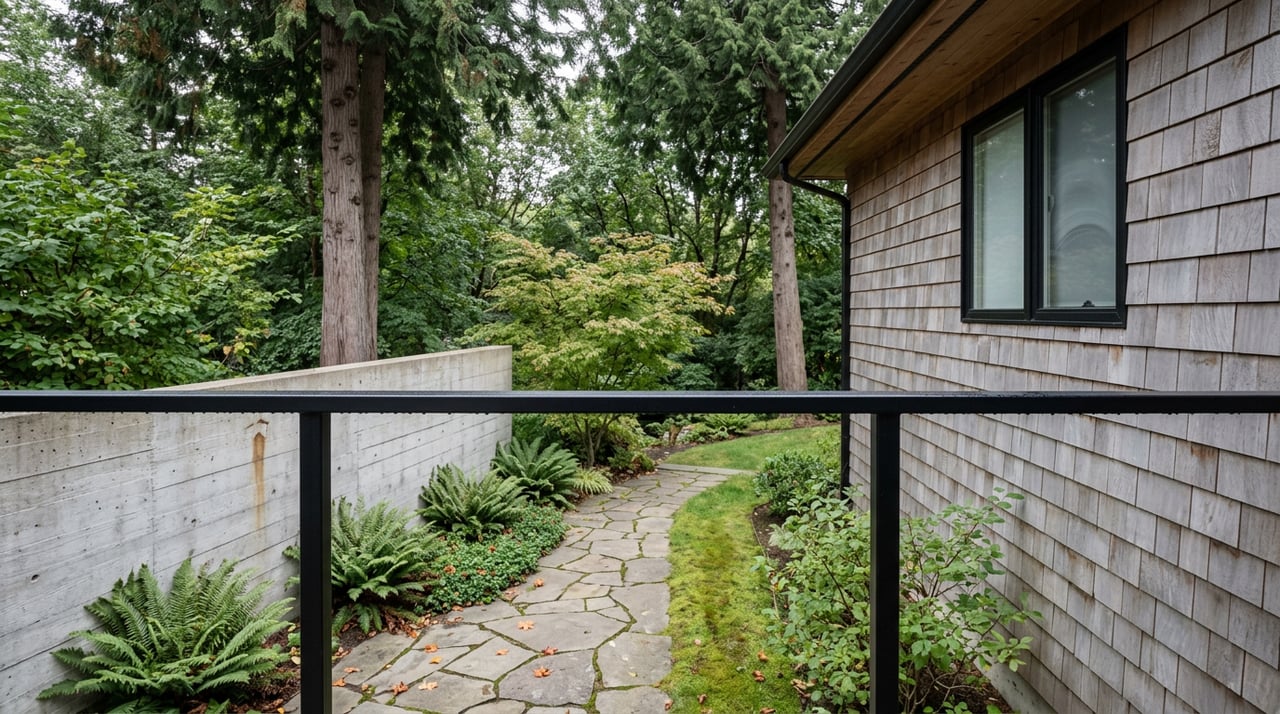
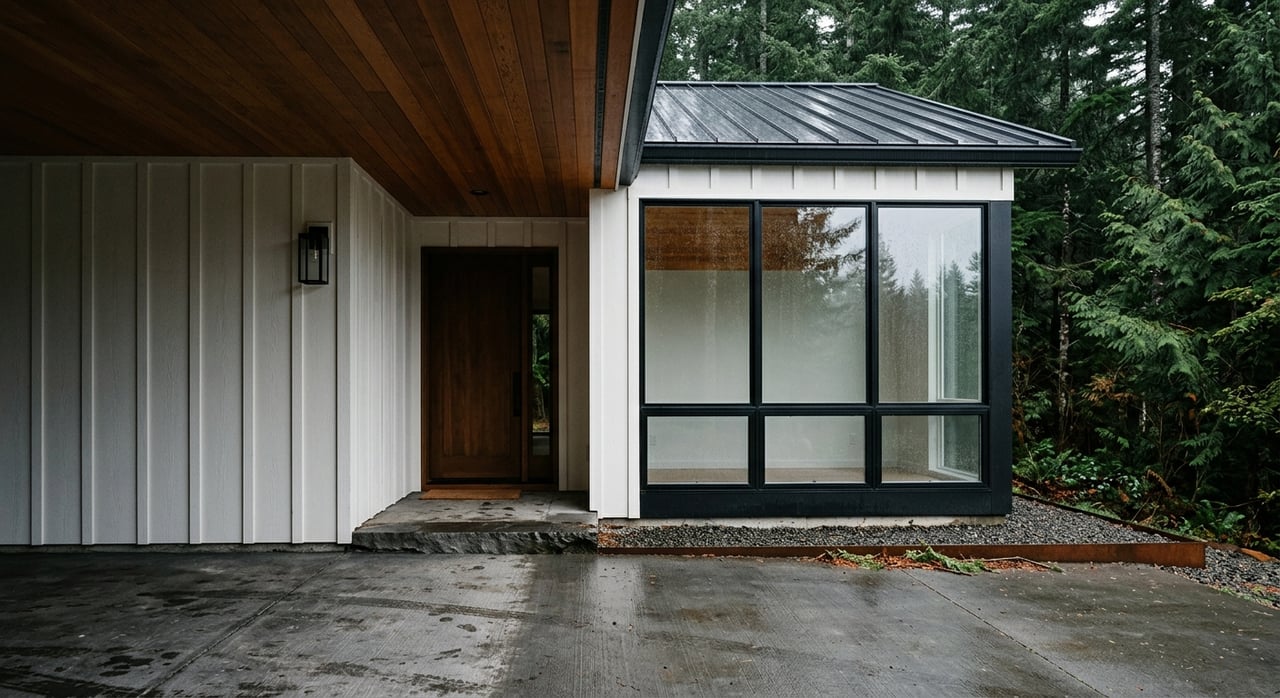
One of Poulsbo’s strengths is that it offers several different living patterns within a relatively compact area. Some addresses feel close to shops and activity, while others feel tucked into trees, set on larger lots, or oriented toward a more rural pace.
City planning materials support that idea by emphasizing connections between neighborhoods, schools, parks, transit, and the waterfront. In practice, that means your day-to-day experience can change significantly from one pocket to the next.
Areas near downtown and parts of Poulsbo Place tend to appeal to buyers who want easier access to the historic core. More wooded or privacy-oriented settings can often be found in places such as Forest Rock Hills or on the more suburban edges, while rural Poulsbo generally appeals to buyers looking for acreage and more separation between homes.
Lemolo and waterfront-adjacent stretches offer another kind of tradeoff. The city’s Urban Paths plan describes parts of the Lemolo Shore to downtown route as steep, narrow, and winding, which is a useful reminder that scenic settings can come with more complicated access.
What the housing mix looks like
If you are relocating from Seattle or the Eastside, Poulsbo’s housing mix may feel more detached-home oriented than what you are used to. The city’s housing materials say local inventory is still dominated by single-family and larger-unit formats, while smaller homes and missing-middle options remain underrepresented.
That helps explain why many buyers still experience Poulsbo as a detached-home market first. If you want yard space, privacy, or a more traditional single-family layout, you will likely find more options here than in many denser urban neighborhoods.
At the same time, the city is planning for growth. Poulsbo’s comprehensive plan update says the city must plan for 1,977 additional housing units by 2044, and local policy efforts are aimed at creating a more diverse range of housing choices.
Smaller and lower-maintenance options
Poulsbo is working to widen its inventory through ADUs, cottage housing, density-bonus incentives, and affordable housing initiatives. The city’s Permit Ready ADU program includes pre-approved plans from 480 to 1,000 square feet.
For buyers, that signals gradual change rather than an instant shift. If you are hoping for lower-maintenance living, it is worth watching for downtown apartments, newer mixed-unit pockets, ADUs, and other smaller formats as inventory evolves.
If you are looking for waterfront homes, larger lots, or high-value single-family properties, Poulsbo and the surrounding North Kitsap area can still offer strong options. This is where local guidance becomes especially valuable, because the feel and function of each pocket can vary quickly.
What to test before making an offer
A smart relocation is about more than liking a listing online. Before you buy in Poulsbo, test the town in the same way you plan to live in it.
Start with a weekday commute-style run. Drive from the neighborhood you are considering to the transit center, ferry terminal, or highway connection you expect to use most often, and do it at the time you would actually leave home.
Then test a weekend or Sunday errand run. This matters because Sunday bus service is limited, on-demand coverage is geographically bounded, and retail or waterfront areas can feel different from the workweek rhythm.
Here are a few things to check in person:
- Travel time from home to your most likely ferry or transit connection
- Parking and loading patterns at the times you would normally travel
- Ease of grocery runs and medical visits from the neighborhood
- Street geometry, especially in hillier or waterfront-adjacent pockets
- Noise, traffic, and visitor activity in and around downtown
- How walkable daily errands really feel from your front door
How to decide if Poulsbo fits your move
Poulsbo tends to work best when you want a smaller waterfront community with real daily amenities and you are comfortable planning around the region’s transportation patterns. It can be especially appealing if you value a calmer pace, access to the bay, and a mix of walkable and residential living options.
The key is to be honest about your routine. Seattle-bound buyers may find the move very workable with the right location and schedule, while Eastside-bound buyers often need to think more carefully about transfer time and trip complexity.
If you are relocating for lifestyle as much as logistics, Poulsbo offers a lot to like. The town gives you a historic waterfront core, practical shopping corridors, scenic residential areas, and room to choose a version of daily life that feels more intentional.
A well-planned move starts with local perspective, not guesswork. If you are weighing Poulsbo against Bainbridge Island or other Kitsap Peninsula options, Mark Middleton Real Estate can help you compare neighborhoods, commute patterns, and property types with a clear, concierge-level approach.
FAQs
What is the Seattle commute from Poulsbo like?
- For many residents, commuting to Seattle involves a drive or bus connection to Bainbridge Island or Kingston, followed by a ferry trip and then a final leg into the city. The full travel sequence matters more than the sailing time alone.
What is the Eastside commute from Poulsbo like?
- Eastside commuting is usually less direct than Seattle commuting because there is no direct ferry from Poulsbo to Bellevue or Redmond. Most buyers should expect a transfer or a longer drive segment.
Which part of Poulsbo is most walkable for daily life?
- Historic downtown is generally the most walkable part of Poulsbo, with Front Street, the waterfront, shops, cafes, galleries, and community amenities concentrated in the core.
Which areas of Poulsbo feel more suburban or rural?
- Areas outside downtown and the main commercial corridors often feel more suburban, wooded, or rural. Some pockets offer larger yards, more privacy, or acreage-oriented living depending on location.
What kind of housing is most common in Poulsbo?
- Poulsbo’s housing inventory is still dominated by single-family and larger-unit formats. Smaller homes, attached options, and missing-middle housing are less common but are part of the city’s long-term housing strategy.
What should you test before buying in Poulsbo?
- You should test a weekday commute, a weekend errand run, access to groceries and services, neighborhood street conditions, and the practical feel of getting from your home to transit, ferry connections, and daily destinations.